
# Color Game Three-Dice Payouts: Betting Systems, Payout Ratios, and Bankroll Management
The Philippine Color Game is universally recognized for its immediate gratification and colorful carnival presentation. Yet beneath its simple layout of six colored squares lies a distinct payout structure governed by the permutations of three independent dice. Whether playing at a street corner peryahan during a fiesta or through an accredited digital gaming lobby, having an exact understanding of how payouts are calculated—and how common betting systems perform against table mathematics—is essential for any disciplined participant.
Modern online platforms have enriched the traditional experience by introducing specialized side bets, dynamic live video feeds, and real-time electronic ledgering. This guide breaks down the full three-dice payout architecture, examines popular wagering methodologies, and details practical bankroll safeguards designed to protect your capital.
The Standard Three-Dice Payout Architecture
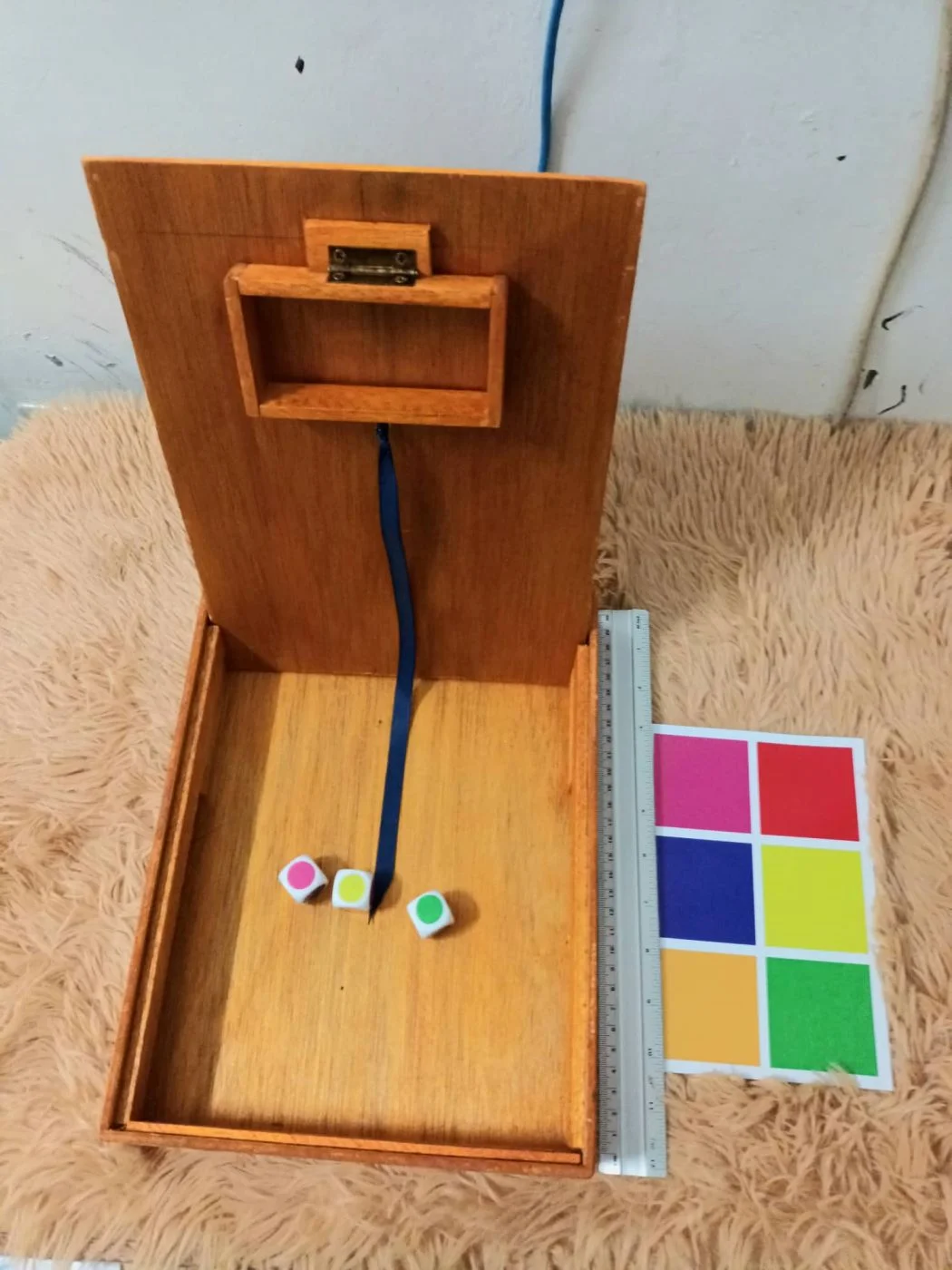
In standard Philippine rules, players place wagers on one or more of six colors: Yellow, White, Pink, Blue, Red, and Green. Three colored cubes are dropped through an acrylic tumbler, a funnel, or an automated mechanical tower. When the cubes settle, the top faces determine the winning colors.
Standard Three-Dice Payout Schedule
| Resulting Matches | Official Payout | Total Cash Returned | |
|---|---|---|---|
| on Chosen Color | Ratio (Profit) | (Stake + Net Profit) | |
| Zero Matches | Loss | ₱0 (Stake Forfeited) | |
| Single Match (1x) | 1 to 1 (1:1) | 2x Original Stake | |
| Double Match (2x) | 2 to 1 (2:1) | 3x Original Stake | |
| Triple Match (3x) | 3 to 1 (3:1) | 4x Original Stake | ### Understanding Net Profit vs. Total Payout |
| Chosen Bet Size | 0 Matches (Loss) | 1 Match (1:1 Return) | 2 Matches (2:1 Return) | 3 Matches (3:1 Return) | |
|---|---|---|---|---|---|
| ₱20 | -₱20 | +₱20 (₱40 Total) | +₱40 (₱60 Total) | +₱60 (₱80 Total) | |
| ₱50 | -₱50 | +₱50 (₱100 Total) | +₱100 (₱150 Total) | +₱150 (₱200 Total) | |
| ₱100 | -₱100 | +₱100 (₱200 Total) | +₱200 (₱300 Total) | +₱300 (₱400 Total) | |
| ₱500 | -₱500 | +₱500 (₱1,000 Total) | +₱1,000 (₱1,500 Total) | +₱1,500 (₱2,000 Total) | |
| ₱1,000 | -₱1,000 | +₱1,000 (₱2,000 Total) | +₱2,000 (₱3,000 Total) | +₱3,000 (₱4,000 Total) | Digital Color Game Side Wagers |
| Any Triple (All Same Color) | Specific Triple Color |
|---|---|
| - Pays 30:1 to 35:1 | - Pays 150:1 to 180:1 |
| - Triggers on any mono-drop | - Requires named color |
| Two-Color Exact Pair | Rainbow / All Different |
| - Pays 5:1 | - Pays 2:1 |
| - Requires two declared hues | - Three distinct colors |
The Any Triple Bet
This proposition wagers that all three dice will land on the identical color, regardless of which of the six colors it turns out to be.
- Combinations: There are 6 possible triple outcomes out of 216 total permutations (`Yellow-Yellow-Yellow`, `Red-Red-Red`, etc.).
- Probability: $\frac{6}{216} = \frac{1}{36} \approx 2.78\%$.
- Standard Payout: Usually ranges between 30:1 and 33:1 depending on operator paytables.
The Specific Triple Bet
This high-volatility wager requires naming the precise color of the triple before the drop (for example, wagering specifically that a triple Green will land).
- Probability: $\frac{1}{216} \approx 0.463\%$.
- Standard Payout: Typically fixed between 150:1 and 180:1. While exciting, the house edge on specific triples is significantly higher than the standard color bet.
All Different (Rainbow Drop)
A wager that all three dice will display three distinct, non-matching colors.
- Probability: $\frac{6 \times 5 \times 4}{216} = \frac{120}{216} \approx 55.56\%$.
- Standard Payout: Often set at 1:1 or 4:5 due to its high statistical frequency.
Evaluating Wagering Systems on the Color Game
Many players attempt to apply progressive mathematical betting systems to the Color Game in an effort to overcome losing streaks or engineer steady profits. Analyzing these systems against the game's actual probability distribution highlights their strengths and structural hazards.
Loss Probability on Single Color: 57.87%
Win Probability on Single Color: 42.13%
v
Systemic Evaluation: Can Progressive Betting Overcome the 7.87% House Edge?
The Martingale Progression (Double-on-Loss)
In a classic Martingale system, a player doubles their wager after every loss on the same color, resetting to the base unit upon securing a win.
| Martingale Step | Wager Amount | Round Outcome | Cumulative Net Balance |
|---|---|---|---|
| Step 1 | ₱50 | Loss | -₱50 |
| Step 2 | ₱100 | Loss | -₱150 |
| Step 3 | ₱200 | Loss | -₱350 |
| Step 4 | ₱400 | Loss | -₱750 |
| Step 5 | ₱800 | Loss | -₱1,550 |
| Step 6 | ₱1,600 | Win | +₱50 Net Profit |
Why Martingale is Hazardous in Color Game:
- High Loss Frequency: In the Color Game, the probability of missing your color on any single roll is 57.87%—significantly higher than European Roulette (48.6%) or Baccarat (45.8%).
- Consecutive Loss Runs: Experiencing 6 or 7 consecutive misses occurs far more frequently than intuition suggests. At Step 7, an initial ₱50 bet demands a ₱3,200 outlay simply to capture a ₱50 gain.
- Table Ceilings and Bankroll Limits: Regulated digital tables impose strict minimum and maximum wagering caps. A prolonged cold run will cause the player to hit the table limit, making it impossible to double the bet and locking in a massive capital loss.
The D'Alembert System (Linear Arithmetic Adjustments)
The D'Alembert strategy adopts a more moderate approach by increasing your bet by one unit following a loss, and reducing it by one unit following a win:
- If your base unit is ₱50: After a loss, you bet ₱100; after another loss, ₱150; after a win, you scale down to ₱100.
- Verdict: While D'Alembert avoids the catastrophic exponential spikes of Martingale, it still cannot neutralize the persistent 7.87% house advantage over extended sessions.
Flat Betting with Fractional Bankroll Allocation
The most mathematically sound approach for recreational players is Flat Betting, where you wager a fixed, consistent stake on every round regardless of previous outcomes.
- Select an individual unit representing no more than 1% to 2% of your total entertainment budget.
- If your bankroll for the evening is ₱3,000, your base wager remains fixed at ₱30 to ₱60 per roll.
- Flat betting allows you to absorb normal statistical variance, enjoy extended gameplay sessions, and fully capitalize when lucky double or triple payouts hit the table.
Multi-Color Spreading: Myth vs. Mathematical Reality
A widespread practice on both physical and digital boards is spreading bets across two or three adjacent colors. A player might place ₱100 on Red, ₱100 on White, and ₱100 on Yellow simultaneously.
Three-Color Spread Outcome Analysis
| Dice Outcome | Individual Results | Net Financial Result |
|---|---|---|
| Red - White - Blue | Red Wins (+₱100) | +₱100 + ₱100 - ₱100 |
| White Wins (+₱100) | = +₱100 Profit | |
| Blue Misses (-₱100) | ||
| Red - Blue - Green | Red Wins (+₱100) | +₱100 - ₱100 - ₱100 |
| 2 Colors Miss | = -₱100 Loss | |
| Blue - Blue - Green | All 3 Colors Miss | -₱300 Total Loss |
The Takeaway on Spread Wagering
Spreading bets across multiple squares increases the hit frequency (reducing the number of rounds where you walk away with zero return), but it frequently produces "push" results or partial losses where one winning color fails to offset the two losing bets. Spreading cannot mathematically reduce the 7.87% house edge; it simply trades high volatility for lower volatility.
Live Dealer Studio Streams vs. Digital RNG Color Games
Modern online platforms in the Philippines feature two distinct technological presentations for the Color Game:
Live Dealer Broadcast vs. Automated RNG
| Live Dealer Video Broadcast | Animated Digital RNG Engine |
|---|---|
| - Real physical dice tumbled | - Pure algorithmic RNG simulation |
| in an automated air tower. | - Instant round resolution (<5s). |
| - Real-time video streaming. | - Solo gaming speed controls. |
| - Transparent community chat. | - Certified mathematical seeds. |
| - Fixed 25-second turn timers. | - Zero network latency impacts. |
Live Broadcast Studios
In live dealer games, human hosts operate certified mechanical shakers or pneumatic drop chambers inside regulated production studios. Players see the dice tumble and settle from multiple high-definition camera angles in real time. This format delivers the communal camaraderie and authentic audio ambiance of a physical town peryahan.
Automated RNG Tables
Animated RNG games use cryptographic pseudorandom algorithms to simulate the three dice. Rounds resolve in under five seconds, catering to players who prioritize speed and efficiency over atmospheric presentation.
Both live and RNG software titles must adhere to strict fairness benchmarks and algorithmic audits monitored by PAGCOR.
Financial Administration and Domestic Payment Channels
Managing deposits and cash-outs at regulated online tables is streamlined through established Philippine mobile payment networks.
| Top-Up via GCash Infrastructure | Withdrawals to Maya Wallet |
|---|---|
| - Real-time QR / MPIN validation - Instant direct bank transfer | |
| - Zero transaction delays - Encrypted 2FA authentication |
Philippine players utilize direct e-wallet integrations to maintain strict control over gaming balances:
- Instant, seamless account deposits via GCash.
- Fast, secure cash-outs directly to verified accounts via Maya.
Responsible Gaming and Bankroll Safeguards
Because the Color Game resolves rounds rapidly, it is easy to accumulate significant turnover without noticing. Always treat gaming strictly as paid recreation. Never attempt to use gambling to solve personal financial obligations or recover money lost in prior sessions.
If you suspect your gaming behavior is becoming compulsive or unsustainable, reach out for supportive, non-judgmental assistance through global organizations such as Gamblers Anonymous and Gambling Therapy.
Frequently Asked Questions
If my color appears on two dice, what is my total payout?
When your chosen color lands on two dice, the payout is 2:1. For a ₱100 wager, you receive your original ₱100 stake back plus ₱200 in net profit, totaling ₱300 credited to your balance.
Can a progressive betting system like Martingale beat the Color Game?
No. Progressive systems like Martingale cannot alter the underlying mathematical probabilities. Because the house edge remains 7.87% on every roll, doubling wagers after losses simply increases your risk of hitting table maximum limits or exhausting your bankroll during an inevitable streak of misses.
What is the payout for hitting a triple match on a single color bet?
Under standard rules, hitting all three dice on your chosen color pays 3:1. A ₱100 wager returns ₱400 in total (your ₱100 stake plus ₱300 profit).
Why do some online Color Games offer an "Any Triple" side bet?
Digital versions often introduce side bets like "Any Triple" to give players an option with higher payout potential (typically 30:1 to 35:1). This bet wins whenever all three dice match each other, regardless of which color appears.
How do I know if an online Color Game is fair?
Legitimate online Color Games operate under formal licenses granted by PAGCOR. Licensed operators must submit their software and live drop mechanisms to independent auditing laboratories to certify that all 216 dice outcomes occur with mathematically uniform randomness.
Connected Table Game Guides
- Color Game Peryahan Odds and Mathematical Probabilities
- Traditional Perya Carnival Games in the Philippines
- Online Tongits Rules and Gameplay Mechanics
- Pusoy Dos Card Rankings and Strategy
- Filbet Pinoy Table Games and Perya Portal
Official Member Access and Registration
To access real-money gaming tables, practice slot mechanics, or claim verified promotional credits, visit the official Filbet Portal on mobile or desktop.