
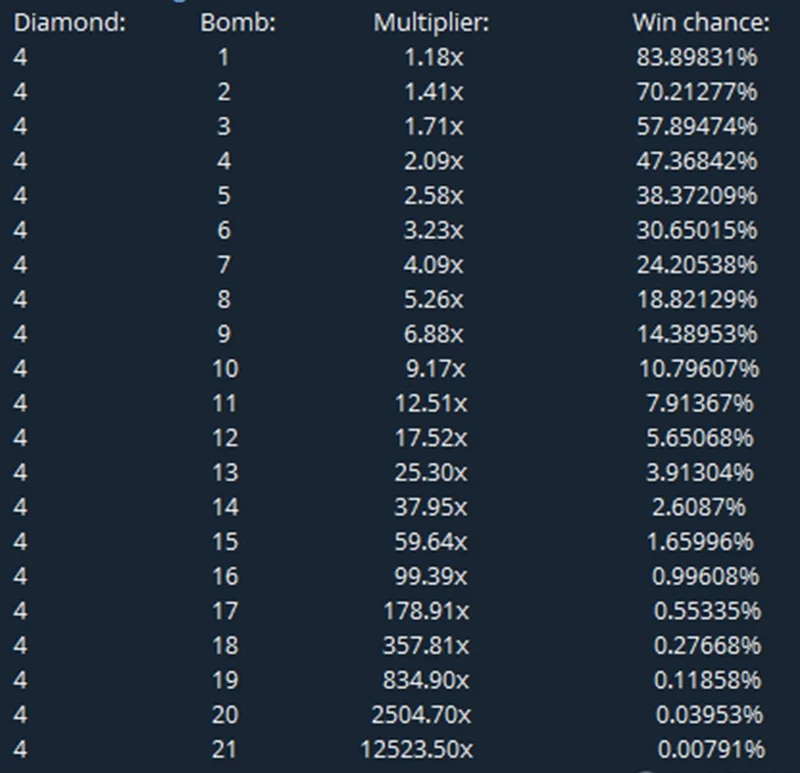
In arcade crash and tile-clearing games, knowing when to stop is the single most critical factor separating sustainable play from rapid bankroll depletion. Unlike traditional casino games where the round concludes automatically following a dice roll or reel spin, the Mines arcade game places the complete burden of termination on the player. Every revealed gem presents a psychological and mathematical dilemma: lock in an accrued profit or expose that profit to another tile selection for an incrementally higher payout.
Developing structured cashout patterns and disciplined risk management parameters allows players across the Philippines to navigate this tension systematically. By replacing impulse and emotional escalation with predetermined exit rules, you can maintain firm control over session variance, preserve your principal capital, and optimize your expected value across long-term play.
The Psychology and Mathematics of the Cashout Decision
The fundamental challenge of Mines lies in the asymmetrical nature of the risk-reward payoff. Each successful pick yields an incremental multiplier boost, but a single incorrect pick results in a total loss of both the base stake and all accumulated gains for that round.
Round Progression:
[Initial Stake: 50 PHP]
+---> Pick 1: Gem (1.18x = 59 PHP) ----> Cash Out? OR Continue
+---> Pick 2: Gem (1.43x = 71.50 PHP) -> Cash Out? OR Continue
+---> Pick 3: Gem (1.78x = 89 PHP) ----> Cash Out? OR Continue
+---> Pick 4: MINE (Explosion!) -------> 0 PHP Returned (-50 PHP net)
As the multiplier ascends, two competing psychological forces emerge:
- Greed and Overconfidence: After uncovering several safe tiles, players often experience an artificial sense of mastery, assuming that their coordinate selection is guided by intuition rather than pure probability. This encourages unnecessary additional clicks into mathematically adverse territory.
- Loss Aversion Panic: Players who experience a sudden loss often try to recover lost funds within a single round by pushing deep into double-digit multipliers on subsequent games, abandoning rational risk thresholds.
Mathematically, the probability of survival decreases with every click, while the house edge remains constant on every prospective choice. Because the platform extracts a modest margin from the fair statistical multiplier at every step, taking unnecessary risks beyond an optimal target compounds the statistical friction against your wallet.
Fixed Cashout vs. Dynamic Cashout Systems
To eliminate emotional variance, seasoned tacticians employ two distinct cashout frameworks: Fixed Cashout and Dynamic Cashout. Understanding the mechanics of each allows you to match your gameplay to your target risk profile.
Fixed Cashout Model
Under the Fixed Cashout model, the player establishes an uncompromised multiplier target prior to launching the round. Regardless of board conditions or gut feelings, the cashout is executed immediately upon reaching that threshold.
- Objective: Consistent, high-frequency conversion of modest gains.
- Common Thresholds: 1.20x to 1.50x on 3-mine boards, or 2.00x on 5-mine boards.
- Execution: Automated using in-game Auto-Cashout settings whenever available.
Fixed Model Workflow:
Set Target: 1.50x
Round Starts -> Pick 1 (1.18x) -> Pick 2 (1.43x) -> Pick 3 (1.78x) -> AUTOMATIC CASHOUT
Result: Round ends instantly; profit locked; no additional picks permitted.
The primary strength of the fixed model is absolute discipline. It completely removes subjective hesitation. Over hundreds of rounds, this approach establishes predictable session volatility and minimizes deep capital drawdowns.
| Risk Category | Mine Count | Optimal Pick Target | Average Multiplier Target | Round Win Probability | Recommended Session Role |
|---|---|---|---|---|---|
| Low Risk | 1 to 3 Mines | 2 to 4 Picks | 1.15x - 1.45x | 75% - 88% | High-volume turnover, low drawdown, capital preservation |
| Medium Risk | 4 to 6 Mines | 2 to 3 Picks | 1.50x - 2.10x | 55% - 68% | Balanced capital growth, standard session play |
| High Risk | 8 to 12 Mines | 1 to 2 Picks | 1.80x - 3.20x | 35% - 50% | High-reward tactical strikes, short session duration |
| Extreme Risk | 15 to 20 Mines | 1 Pick Only | 3.50x - 5.00x | 20% - 30% | Lottery-style wagers; micro-fraction stakes only |
Total Bankroll: 2,000 PHP
| -- Session Allocation (20% Max): 400 PHP |
|---|
| -- Session Stop-Loss Limit: -200 PHP (Cease play immediately) |
| -- Session Take-Profit Target: +150 PHP (Lock in profit and withdraw) |
| -- Reserve Capital: 1,600 PHP (Untouched in secure digital wallet) |
Proportional Unit Staking
Never wager an arbitrary amount. Establish a fixed unit bet based on a conservative percentage of your total available gaming fund:
- 1% Conservative Unit: If your gaming balance is 2,000 PHP, your baseline stake is 20 PHP per round. This provides a 100-bet cushion, ensuring that a cluster of three or four consecutive mine detonations does not disrupt your session stability.
- 2% Balanced Unit: For an active balance of 1,000 PHP, a 20 PHP stake accommodates standard volatility while allowing room to capitalize on steady cashout cycles.
- Never Exceed 5%: Wager sizes exceeding 5% of your total balance subject your wallet to severe risk of ruin, where just five bad rounds can wipe out a quarter of your capital.
The Pitfall of Negative Progression Systems
Many casual players attempt to pair Mines cashout patterns with negative progression betting systems, most notably the Martingale strategy. Under this structure, a player doubles their bet following every lost round, intending to recoup previous losses with a single low-multiplier cashout.
This strategy is mathematically flawed and dangerous:
Martingale Escalation Example (Target 1.50x Cashout):
Round 1: 20 PHP (Loss) -> Net: -20 PHP
Round 2: 40 PHP (Loss) -> Net: -60 PHP
Round 3: 80 PHP (Loss) -> Net: -140 PHP
Round 4: 160 PHP (Loss) -> Net: -300 PHP
Round 5: 320 PHP (Loss) -> Net: -620 PHP
Round 6: 640 PHP (Loss) -> Net: -1,260 PHP
In just six rounds, an initial 20 PHP stake forces the player to risk 640 PHP simply to recover accumulated losses and win a tiny margin. In reality, a string of early mine strikes will swiftly hit platform table limits or exhaust the player's wallet balance, locking in a catastrophic loss.
The only sustainable framework is Flat Staking or Conservative Positive Progression, where bet sizes remain constant or increase marginally only after reaching established profit milestones.
Technical Latency, Operational Disconnects, and Mobile Play
In mobile-first gaming environments like the Philippines, technical infrastructure directly affects cashout performance. A significant volume of play occurs on mobile devices utilizing 4G or 5G cellular data provided by major carriers such as Globe, Smart, and DITO.
Because a cashout request requires a real-time data packet to travel from your smartphone to the gaming platform's core server, high network latency (ping) or sudden packet loss can prevent a manual cashout tap from registering before a session timeout or accidental misclick occurs.
> 🔄 Execution Workflow: [Smartphone Screen] --(Lag / Packet Drop)--> [Cellular Tower] ---> [Game Server] Manual Cashout Tap Pending Request Round Unsettled
Operational Safeguards for Mobile Users
1. Mandatory Auto-Cashout Configuration: Always utilize the integrated auto-cashout feature whenever available. When set to a numerical multiplier (e.g., 1.50x), the game server executes the cashout settlement internally the moment the qualifying tile is cleared, eliminating dependency on your phone's return signal.
2. Avoid Network Handover Zones: Do not engage in manual multi-click rounds while traveling inside transit vehicles or moving across different Wi-Fi access points where cell tower handovers introduce latency spikes.
3. Clean Cache and Background Applications: Close heavy background streaming applications that consume bandwidth, ensuring dedicated throughput for the gaming client.
Maintaining financial hygiene through regulated, instantaneous channels like GCash and Maya allows players to transfer winnings directly into secure personal accounts rather than leaving idle balances exposed on gaming portals.
Furthermore, responsible gaming standards governed by regulatory frameworks under PAGCOR emphasize player protection, self-imposed deposit ceilings, and mandatory cooling-off periods. If you observe signs of compulsive chasing or emotional strain, seek confidential guidance through international support organizations such as Gamblers Anonymous and Gambling Therapy.
Frequently Asked Questions
What is the safest multiplier to target in the Mines arcade game?
Statistically, targeting multipliers between 1.15x and 1.40x on a board configured with 2 or 3 mines offers the highest mathematical probability of regular completion (typically between 75% and 85%). While the profit per round is modest, this range shields the bankroll from aggressive cumulative volatility curves.
Can using an automated cashout setting improve my results?
Yes. Automated cashout removes two primary sources of loss: human hesitation and telecommunication network latency. By programming the system to bank profits automatically at a specific threshold (e.g., after 2 picks or at 1.50x), you ensure consistent execution regardless of emotional impulses or mobile signal drops.
Does changing my tile selection pattern change my risk profile?
No. Every tile on a certified 5x5 grid has an identical probability of holding a mine at the start of a round. Whether you select tiles in a straight line, choose corners, or click haphazardly, the mathematical odds remain unchanged. Risk is governed exclusively by the number of active mines and the total count of tiles you choose to uncover before cashing out.
Why do I keep losing my balance when trying to double my money?
Doubling your money requires achieving a 2.00x multiplier or greater. On a 5-mine grid, reaching 2.00x requires clearing four consecutive safe tiles, which has an overall cumulative survival chance of less than 40%. Repeatedly attempting 2.00x or higher multipliers ensures that variance will trigger mine detonations frequently enough to erode your balance over time unless strict stop-loss rules are applied.
How much of my deposit should I allocate to a single Mines session?
A prudent guideline is to allocate no more than 15% to 20% of your total gambling balance to an individual gaming session. Within that session, individual wagers should be restricted to 1% to 2% of that allocated amount. If that session allocation is lost, conclude play for the day rather than making additional deposits to chase losses.
Connected Guides and Table Resources
- Comprehensive Table and Arcade Games Hub
- Mines Game Grid Strategy and Multiplier Tuning
- Plinko Peg Payout Probabilities and Risk Levels
- Aviator Crash Multiplier Timing and Hedging Tactics
- Live Baccarat Player and Banker Rules Guide
Official Member Access and Registration
To access real-money gaming tables, practice slot mechanics, or claim verified promotional credits, visit the official Filbet Portal on mobile or desktop.