

Plinko has evolved from a popular television game show feature into one of the most prominent arcade attractions on modern gaming platforms in the Philippines. Characterized by a vibrant triangular grid of pegs through which a dropped disc or ball descends toward an array of multiplier troughs, the game blends visual simplicity with deep mathematical precision.
While many casual players view the trajectory of the ball as pure chaotic luck, the underlying movement follows established laws of probability and physics. Modern online Plinko is the digital incarnation of the Galton Board, a mathematical device invented in the 19th century to demonstrate the central limit theorem and binomial distribution. Understanding how peg arrangements, row settings, and volatility toggles dictate your expected returns is essential for developing a disciplined, long-term approach to this fast-paced arcade game.
Historical Origins and the Galton Board Principle
The mechanical blueprint of Plinko was conceived in 1873 by Sir Francis Galton, a British polymath who designed the "quincunx" or bean machine to visually prove that random events cluster around a central average.
Plinko Peg Matrix and Descent Path
( * ) <-- Ball Drops
/ \
o o
/ \ / \
o o o
/ \ / \ / \
o o o o
/ \ / \ / \ / \
o o o o o
---------------------------
[10x] [2x] [0.5x] [2x] [10x] <-- Multiplier Buckets
In Galton's machine, small spheres are dropped from a single point at the apex of an upright board studded with rows of staggered pins. Whenever a ball strikes a pin, it faces an equal 50% theoretical probability of bouncing either to the left or to the right.
As the ball travels downward through successive rows, these binary 50/50 decisions compound. Because there are vastly more intermediate pathways that return the ball toward the middle of the board than pathways leading exclusively to the extreme outer edges, the falling spheres invariably form a classic bell-shaped normal distribution curve upon reaching the bottom bins. Modern digital Plinko platforms replace physical brass pins with cryptographic random number generators (RNG), yet the mathematical laws dictating the ball's final resting position remain identical.
Binomial Mathematics: Why Center Slots Dominate
To comprehend Plinko payout structures, one must examine the mathematics of combinations and the binomial distribution. The probability of a ball landing in any specific bottom trough after traversing $n$ rows of pegs can be calculated with mathematical exactness.
Let $n$ represent the number of pin rows, and let $k$ represent the number of times the ball defUtility bounces to the right during its descent (where $k$ ranges from $0$ to $n$). The probability $P(k)$ is expressed as:
$$P(k) = \frac{\binom{n}{k}}{2^n} = \frac{n!}{k!(n-k)! \cdot 2^n}$$
Mathematical Demonstration: An 8-Row Grid
On an 8-row Plinko board, there are 9 terminal payout troughs at the base, indexed from 0 (extreme left) to 8 (extreme right). The total number of unique mathematical paths a ball can take through the pegs is $2^8 = 256$.
| Slot Index | Pathway Description | Number of Unique Paths $\binom{8}{k}$ | Exact Probability | Approximate Frequency | Typical High-Risk Multiplier |
|---|---|---|---|---|---|
| Slot 0 | 8 Left Bounces, 0 Right | 1 | 1 / 256 (0.39%) | 1 in 256 balls | 29.00x |
| Slot 1 | 7 Left, 1 Right | 8 | 8 / 256 (3.125%) | 1 in 32 balls | 4.00x |
| Slot 2 | 6 Left, 2 Right | 28 | 28 / 256 (10.94%) | 1 in 9.1 balls | 1.50x |
| Slot 3 | 5 Left, 3 Right | 56 | 56 / 256 (21.875%) | 1 in 4.6 balls | 0.30x |
| Slot 4 (Center) | 4 Left, 4 Right | 70 | 70 / 256 (27.34%) | 1 in 3.65 balls | 0.20x |
| Slot 5 | 3 Left, 5 Right | 56 | 56 / 256 (21.875%) | 1 in 4.6 balls | 0.30x |
| Slot 6 | 2 Left, 6 Right | 28 | 28 / 256 (10.94%) | 1 in 9.1 balls | 1.50x |
| Slot 7 | 1 Left, 7 Right | 8 | 8 / 256 (3.125%) | 1 in 32 balls | 4.00x |
| Slot 8 | 0 Left, 8 Right | 1 | 1 / 256 (0.39%) | 1 in 256 balls | 29.00x |
This mathematical reality highlights why the central bins provide fractional payouts (such as 0.20x or 0.30x), meaning you lose a substantial portion of your stake when a ball settles in the middle. Between Slots 3, 4, and 5, approximately 71.09% of all dropped balls will settle in sub-1.0x loss positions on an 8-row grid. The lucrative outer edges occur only when a ball consistently deflects in the same direction across every consecutive row—an event that happens less than 1% of the time.
Row Configurations and Volatility Profiles
Online Plinko titles typically allow players to modify two core variables before initiating play: the number of rows (usually configurable from 8 to 16 rows) and the volatility risk tier (Low, Medium, or High).
[Row Count: 8 to 16] x [Risk Tier: Low / Medium / High]
v
Determines Board Architecture:
- Number of Payout Troughs (Rows + 1)
- Center Trap Severity (0.2x to 0.9x)
- Maximum Outer Edge Multiplier (5.6x to 1000x)
Increasing the row count increases the total number of landing slots and pushes the outer multipliers to astronomical heights. However, it also stretches the probability distribution, making the outer extremes significantly harder to achieve.
Payout Distribution Across 16 Rows
On a maximum 16-row Plinko grid, there are 17 landing slots and $2^{16} = 65,536$ potential paths. The probability of striking the ultimate edge slot (16 consecutive deflections to one side) is just 1 in 65,536 (0.0015%).
To compensate for this extreme rarity, platforms scale the payout multipliers according to the selected risk profile:
| Volatility Setting | Center Slot Payout | Mid-Range Multipliers | Outer Edge Multiplier | Strategic Characteristic |
|---|---|---|---|---|
| Low Risk | 0.5x to 0.7x | 1.0x to 1.4x | 16x | Smooth, low drawdown, capital recycling |
| Medium Risk | 0.3x to 0.4x | 1.3x to 3.0x | 110x | Balanced distribution; periodic recovery hits |
| High Risk | 0.2x | 2.0x to 4.0x | 1,000x | Extreme variance; long losing stretches, massive top payouts |
Low-Risk Settings: Sustained Turnover
In Low-Risk mode, the central troughs do not penalize the player severely. Landing in the center returns between 0.5x and 0.7x your bet, while intermediate slots hover comfortably around 1.0x to 1.3x. While the maximum edge multiplier is capped at a modest 16x, the risk of rapid balance depletion is mitigated. This mode is favored by players aiming to fulfill wagering requirements or execute extended, low-stress gameplay sessions.
High-Risk Settings: The Outlier Pursuit
In High-Risk mode, the center trough acts as a substantial sink, returning only 0.20x of the wagered amount. More than 60% of all drops result in an 80% loss of the active stake. However, the outer edges offer life-changing potential, reaching multipliers up to 1,000x on 16-row configurations. This mode demands substantial bankroll reserves capable of withstanding hundreds of consecutive low-return drops while awaiting an edge deflection.
Tactical Bet Sizing and Auto-Play Dispersion in PHP
Because Plinko outcomes are governed by large sample sizes and the law of large numbers, single-ball drops provide zero statistical predictability. To experience the mathematical properties of Plinko, sessions are typically conducted over dozens or hundreds of drops using the auto-play function.
In the Philippines, where players fund their gaming wallets using domestic fiat solutions, managing stakes in Philippine Pesos (PHP) requires meticulous unit fractioning.
| Strategy Parameter | Allocation & Specification |
|---|---|
| Total Dedicated Session Bankroll | 1,000 PHP |
| High-Risk Mode (16 Rows) | |
| Unit Bet Size (0.1%) | 1.00 PHP per drop |
| Target Drop Volume | 1,000 Balls |
| Maximum Tolerable Drawdown | 400 PHP |
| -- Unit Bet Size (1.0%): 10.00 PHP per drop |
| -- Target Drop Volume: 100 Balls |
| -- Maximum Tolerable Drawdown: 250 PHP |
The 1,000-Drop Framework for High Volatility
If you choose to play High-Risk Plinko on a 14- or 16-row board, you must size your bets to survive at least 1,000 drops without going bust. Because the median drop in High-Risk mode returns only 0.2x, your bankroll will experience a persistent downward drift until an outer multiplier (e.g., 26x, 110x, or 1,000x) is struck to restore the balance.
- If your session balance is 1,000 PHP, your individual drop stake should not exceed 1.00 PHP.
- Never bet 20 PHP or 50 PHP per ball on High-Risk mode with a 1,000 PHP bankroll; a typical cluster of 50 center-heavy drops will deplete your entire deposit within two minutes.
The Cluster Fallacy: Why Past Drops Do Not Guide the Next
A psychological trap prevalent in Plinko is the belief that if twenty consecutive balls have landed in the middle slots, an edge bounce is "due." This is a manifestation of the Gambler's Fallacy.
In certified digital Plinko, every ball drop is an independent trial calculated by server-side RNG. The pegs do not possess physical memory, nor do they develop mechanical bias. Whether the previous ball hit the 0.2x center or the 1,000x edge, the probability of the subsequent ball landing in the edge slot remains exactly 1 in 65,536 on a 16-row grid. Pacing your bets uniformly rather than aggressively increasing stakes during dry runs is the only mathematically sound defense.
Mobile Performance and Wallet Transactions
Online Plinko is heavily optimized for mobile devices, allowing seamless play on mobile browsers and Android APK platforms across the Philippines. However, because modern interfaces allow rapid-fire multi-ball drops (where dozens of balls tumble through the pins concurrently), players must account for technical considerations:
- Visual Frame Drops vs. Server Calculation: When deploying multiple balls per second over cellular data networks (such as Globe, Smart, or DITO), screen animations may occasionally stutter or lag. It is important to know that Plinko outcomes are determined cryptographically on the server the millisecond the drop button is pressed. The falling visual animation is simply a graphical rendering. Even if your screen freezes, the settled returns are credited accurately to your wallet balance.
- Instant Digital Wallet Transfers: Leveraging verified Philippine e-wallets like GCash or Maya allows players to establish strict session allocations. By depositing only the precise bankroll intended for a single Plinko run, you eliminate the risk of accidental over-wagering during high-speed auto-play sequences.
Gaming platforms operating within the Philippine jurisdiction are guided by strict compliance frameworks monitored by PAGCOR. Maintaining recreational limits is vital to a healthy gaming experience. If you or someone in your community experiences challenges with excessive play or uncontrolled wagering habits, free and confidential support is accessible through international organizations such as Gamblers Anonymous and Gambling Therapy.
Frequently Asked Questions
What is the typical Return to Player (RTP) percentage in Plinko?
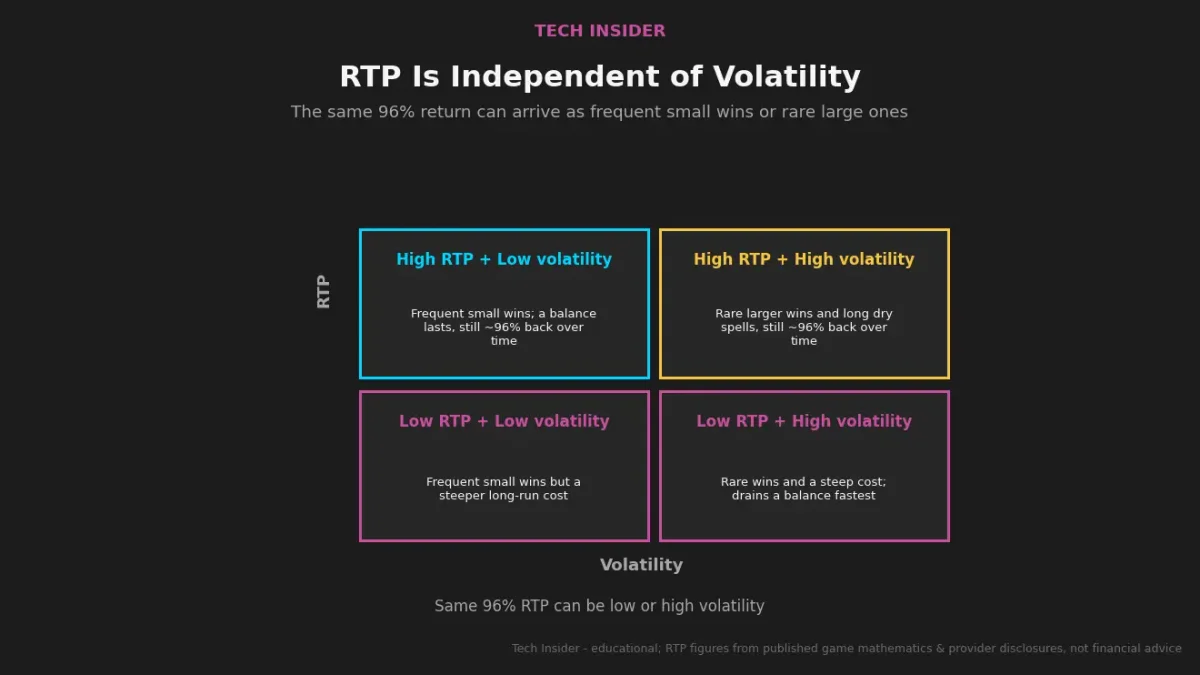
Most certified online Plinko games feature an RTP ranging from 97.00% to 99.00%, depending on the game studio. This corresponds to a slim theoretical house edge of between 1.00% and 3.00%. Regardless of whether you select 8 rows or 16 rows, or choose Low, Medium, or High risk, the mathematical design maintains roughly the same overall theoretical RTP over millions of simulated drops.
Does dropping multiple balls at once change the payout probabilities?
No. Dropping balls simultaneously in rapid-fire mode does not alter individual trajectory probabilities. Each sphere is generated as an isolated statistical event with its own independent RNG seed. While multi-ball drops increase the visual excitement and accelerate your turnover per minute, they do not cause balls to collide with or deflect off one another; each ball interacts solely with the static peg grid.
Which row setting is best for beginners?
For new players, an 8-row to 10-row board configured on Low or Medium risk is recommended. This setup provides smaller multiplier spreads, minimizes the penalty of central troughs (paying 0.5x to 0.7x), and provides a clearer demonstration of binomial distribution without severe bankroll drawdowns.
Can Plinko outcomes be predicted by observing pin bounce angles?
No. In certified online gaming titles, the visual trajectory of the ball bouncing off physical pegs is a client-side animation rendered after the random number generator has already determined the outcome on the server. There is no physical pin wear, surface friction, or atmospheric resistance that can be studied to predict where the ball will land.
What should I do if an auto-play session triggers a rapid balance loss?
Immediately pause the auto-play sequence and assess your remaining bankroll against your predetermined stop-loss limit. If you have reached your daily loss threshold, terminate the session immediately. Avoid the urge to escalate your unit bet size to recoup losses on high-volatility settings, as this dramatically accelerates capital depletion.
Connected Guides and Table Resources
- Comprehensive Table and Arcade Games Hub
- Mines Game Grid Strategy and Mathematical Odds
- Mines Cashout Patterns and Risk Management
- Aviator Crash Multiplier Timing and Hedging Tactics
- Lightning Roulette Straight-Up Multiplier Analysis
Official Member Access and Registration
To access real-money gaming tables, practice slot mechanics, or claim verified promotional credits, visit the official Filbet Portal on mobile or desktop.